Scottish cuisine carries centuries of tradition rooted in resourcefulness and local ingredients. Ancient cooking methods created distinctive flavors that modern kitchens struggle to replicate. However, home cooks can recreate these time-honored techniques with surprising ease.
This guide explores authentic Scottish cooking methods passed down through generations. From peat-smoking to stone-boiling, these techniques connect modern tables with Scotland’s culinary heritage while producing exceptional flavors.
Understanding Ancient Scottish Cooking Methods
Scottish ancestors cooked without modern conveniences like gas stoves or electric ovens. They relied on open fires, heated stones, and natural preservation methods. These techniques developed from necessity but produced remarkable results that defined Scottish cuisine.
Climate and geography shaped traditional cooking approaches. Scotland’s cool, damp weather favored preservation through smoking and salting. Additionally, abundant peat bogs provided fuel that imparted unique smoky flavors to foods.
Ancient Scots maximized every ingredient through nose-to-tail cooking. Nothing went to waste, creating dishes like haggis and black pudding. Therefore, traditional Scottish cooking emphasizes respect for ingredients and sustainable practices.
Cooking Over Open Peat Fires
Peat fires create distinctive smoky flavors impossible to replicate with modern fuels. Peat burns slowly at lower temperatures than wood, producing aromatic smoke rich in earthy notes. This traditional fuel source defined Scottish cooking for millennia.
Modern cooks can approximate peat-fire cooking using charcoal grills with peat briquettes. Add compressed peat blocks to lit charcoal for authentic smoke. However, ensure proper ventilation as peat produces heavy smoke.
Start fires well before cooking to establish even heat. Peat requires 30-45 minutes to reach optimal cooking temperature. Meanwhile, prepare ingredients and gather necessary tools for efficient workflow.
Cook root vegetables directly in peat ashes for authentic flavor. Wrap potatoes, turnips, and onions in wet cloth before burying in hot ashes. This technique produces tender vegetables with subtle smoky undertones.
Suspend meats over peat fires using traditional crook systems. Iron hooks hanging from adjustable chains allow height control for temperature regulation. Therefore, you can adjust cooking speed without moving the fire itself.
Stone-Boiling Traditional Broths
Stone-boiling represents one of Scotland’s oldest cooking methods, predating metal cookware. Heated rocks transfer energy to liquids in wooden vessels or animal stomach linings. This technique created nutritious broths and stews central to Highland cuisine.
Select smooth river stones roughly fist-sized for stone-boiling. Avoid porous rocks that might explode when heated. Additionally, granite and basalt work best for retaining and transferring heat effectively.
Heat stones directly in fire until glowing red, typically 45-60 minutes. Use long tongs or forked sticks to handle hot stones safely. Never touch heated stones directly or splash cold water on extremely hot rocks.
Place broth ingredients in heat-safe wooden bowl or modern stainless pot. Add heated stones one at a time until liquid reaches boiling temperature. Each stone raises temperature significantly, so add gradually to prevent overflow.
Traditional Scottish cock-a-leekie soup works perfectly for stone-boiling. Combine chicken pieces, leeks, barley, and water in your vessel. Add hot stones until simmering, then maintain temperature with fresh heated stones as needed.
Stone-boiling creates unique mineral flavors from rock contact. The technique also prevents burning that occurs with direct-heat cooking. Moreover, gradual temperature increase preserves delicate flavors in herbs and vegetables.
Smoking Fish and Meats the Highland Way
Traditional Scottish smoking used peat and hardwood to preserve salmon, herring, and game meats. Cold-smoking and hot-smoking served different purposes in Highland kitchens. These methods extended food availability through harsh winters while creating beloved flavors.
Build simple smoking chambers using wooden barrels or metal drums. Drill ventilation holes near the bottom and create hanging racks inside. Additionally, adjustable vents control smoke density and temperature.
Cold-smoking requires temperatures below 80 degrees Fahrenheit for extended periods. This method preserves without cooking, ideal for salmon and kippers. Maintain distance between smoke source and food to prevent heat buildup.
According to BBC Good Food, proper cold-smoking techniques preserve fish for weeks while developing complex flavors characteristic of Scottish seafood traditions.
Hot-smoking cooks while flavoring, suitable for trout and mackerel. Maintain temperatures between 165-185 degrees Fahrenheit. This method produces ready-to-eat fish with firm texture and rich smoke penetration.
Brine fish before smoking for authentic Scottish flavor. Dissolve salt and brown sugar in water with juniper berries and bay leaves. Soak fish 4-8 hours depending on thickness, then air-dry before smoking.
Peat smoke creates traditional Scottish kipper flavor. Mix peat with oak or beech chips for balanced smoke. However, pure peat produces intense flavor that may overwhelm delicate fish.
Griddle Cooking on Flat Stones and Iron
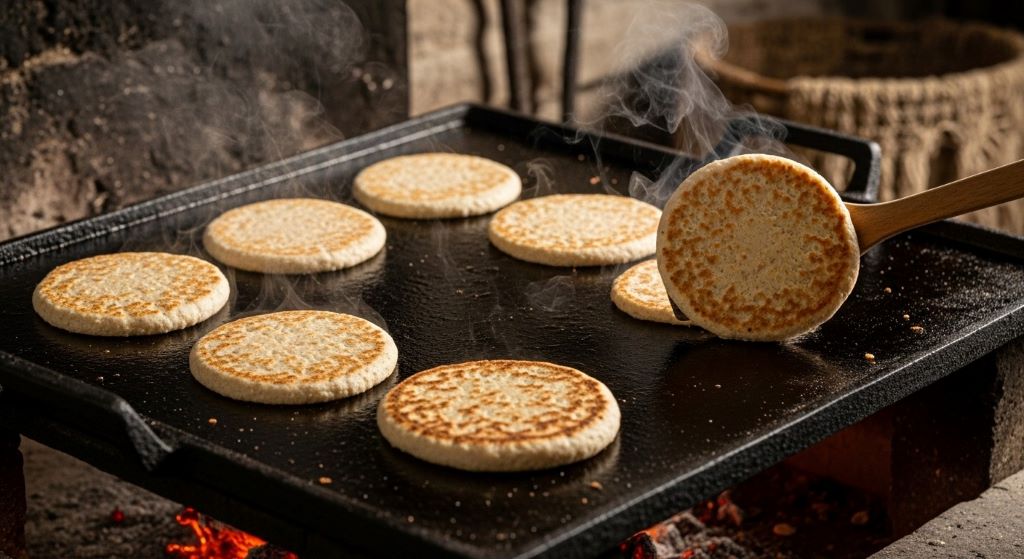
Girdle cooking, using flat iron plates over fires, produced Scottish staples like oatcakes and bannocks. Ancient cooks used flat stones before iron became common. This technique requires no oil and creates characteristic textures.
Season cast-iron griddles before first use by heating with oil until smoking. Wipe clean and repeat several times. Properly seasoned griddles develop non-stick surfaces perfect for traditional recipes.
Heat griddles gradually over moderate fires or stovetop burners. Uneven heating causes warping and hot spots. Therefore, allow 10-15 minutes for complete heat distribution before cooking.
Scottish oatcakes require girdle cooking for authentic texture. Mix medium oatmeal with salt, melted fat, and hot water into stiff dough. Roll thin, cut rounds, and cook on ungreased girdle until edges curl.
Flip oatcakes when edges lift and bottom shows light brown spots. Cook second side briefly until firm. Additionally, finish by toasting edges vertically against girdle for traditional finish.
Bannocks cook similarly but use barley or wheat flour. These unleavened breads sustained Highlanders for centuries. Mix flour with salt and water, form thick rounds, and cook on hot girdle.
Pit-Roasting Large Cuts of Meat
Pit-roasting cooks whole animals or large joints using underground heat. Ancient Scots dug pits, lined them with stones, and built fires for hours. This method produces incredibly tender meat with smoky earth flavors.
Dig pits approximately three feet deep and wide enough for your meat. Line bottom and sides with large flat stones. These rocks retain and radiate heat evenly during cooking.
Build hardwood fire in pit and maintain for 3-4 hours. Add stones to fire as it burns. When coals glow white and stones radiate intense heat, remove remaining wood pieces.
Wrap seasoned meat in multiple layers of wet burlap or large leaves. This protective covering prevents ash contact while allowing smoke penetration. Additionally, moisture creates steam that tenderizes tough cuts.
Place wrapped meat directly on hot stones and cover with canvas or metal sheet. Shovel earth over everything, creating complete seal. Cook times vary: whole lamb requires 8-10 hours, while smaller cuts need 4-6 hours.
According to The Scotsman, pit-roasting remains popular at Highland games and traditional gatherings, connecting modern Scots with ancestral cooking practices.
Preserving Foods Through Salting and Drying
Scottish winters demanded effective preservation methods. Salting and air-drying extended availability of meats, fish, and vegetables through lean months. These techniques remain valuable for authentic flavor recreation.
Salt-curing begins with dry-rubbing meat with coarse salt. Use 2-3 pounds salt per 10 pounds meat. Pack salt thoroughly into all surfaces, especially around bones and joints.
Store salt-cured meats in cool, dry locations hanging freely for air circulation. Cellars or unheated outbuildings work well. Additionally, muslin wrapping protects from insects while allowing moisture evaporation.
Salt cod and salt herring sustained Highland communities for generations. Layer fish fillets with coarse salt in wooden boxes. Weight down layers to extract moisture. Repack with fresh salt after 48 hours.
Desalt preserved fish before cooking by soaking in multiple changes of cold water. This process requires 24-48 hours for thick pieces. However, some salt remains, enhancing traditional Scottish flavor profiles.
Wind-drying works excellently for lean fish and game in Scotland’s climate. Hang prepared pieces in breezy, shaded locations. Natural airflow prevents spoilage while slowly removing moisture. Therefore, no additional heat or smoke is necessary.
Making Traditional Oat-Based Dishes
Oats dominated Scottish cuisine due to climate suitability and nutritional value. Ancient techniques transformed simple oats into porridge, brose, and skirlie. These methods require minimal equipment but deliver maximum comfort and nourishment.
Traditional porridge uses pinhead or steel-cut oats, never rolled varieties. Boil water with pinch of salt in heavy pot. Sprinkle oats into boiling water while stirring constantly to prevent lumps.
Cook porridge slowly over low heat for 30-45 minutes. Stir frequently using traditional spurtle, a wooden stick designed for this purpose. Slow cooking develops creamy texture and nutty flavor impossible in instant oats.
Brose represents even simpler preparation. Place dry oatmeal in bowl and pour boiling water or meat broth over it. Stir briefly and let stand covered for five minutes. This ancient method provided quick, warming meals for shepherds and farmers.
Skirlie uses toasted oats as savory side dish. Melt beef fat or butter in pan and add chopped onions. When softened, stir in medium oatmeal and toast until golden. Season with salt and pepper for traditional accompaniment to meats.
Cooking with Cast Iron and Traditional Cookware
Cast iron pots and kettles served Highland kitchens for centuries. These vessels distribute heat evenly and withstand open-fire cooking. Additionally, well-maintained cast iron develops natural non-stick properties through seasoning.
Suspend cast iron pots over fires using traditional trammel hooks. Chains with adjustable links allow precise height control. Therefore, you regulate cooking temperature without modifying fire intensity.
Three-legged cast iron pots sit directly in coals for stews and one-pot meals. Their legs elevate bases above hottest coals, preventing burning. Moreover, lids feature raised edges for holding coals on top, creating oven-like conditions.
Dutch ovens recreate traditional Scottish baking without modern ovens. Place dough or batter in seasoned Dutch oven. Set pot on bed of coals and pile more coals on lid for even heat distribution.
Maintain cast iron through proper cleaning and seasoning. Scrub with coarse salt and water, never soap. Dry thoroughly and coat lightly with oil. Additionally, regular use builds superior seasoning over time.
Recreating Historical Scottish Recipes
Start with simple traditional recipes before attempting complex dishes. Scotch broth combines barley, root vegetables, and lamb in satisfying one-pot meal. This ancient recipe showcases stone-boiling or cast-iron cooking perfectly.
Stovies utilize leftover meat and potatoes in economical comfort dish. Layer ingredients in heavy pot with minimal liquid. Cook slowly over low heat until potatoes break down into thick sauce. This method reflects Scottish resourcefulness.
Cullen skink, traditional smoked haddock soup, demonstrates smoking and simmering techniques. Poach smoked fish in milk, then combine with potatoes and onions. The result showcases how preservation methods create distinctive flavors.
Experiment with ingredient ratios and cooking times. Ancient cooks worked without written recipes, adjusting by experience. Therefore, trust your senses and make notes for future attempts.
Conclusion
Cooking traditional Scottish food using ancient techniques connects modern cooks with centuries of culinary heritage. These time-honored methods produce distinctive flavors while teaching valuable lessons about resourcefulness and sustainability. From peat-fire cooking to stone-boiling, each technique offers unique advantages over modern conveniences. Additionally, traditional preservation methods extend ingredient usability while creating beloved Scottish flavors. Whether smoking fish over peat, griddle-cooking oatcakes, or slow-simmering porridge, these ancient approaches reward patience with authentic results. Therefore, embrace these traditional techniques to experience Scottish cuisine as ancestors intended while developing deeper appreciation for heritage cooking methods.
Frequently Asked Questions
What equipment do I need to start cooking traditional Scottish food?
Begin with cast-iron skillet, heavy pot, and griddle for most traditional recipes. Add smoker or grill for authentic peat-smoking. Stone-boiling requires heat-safe vessel and smooth river rocks. However, many techniques work with basic kitchen equipment and open-fire access.
Can I use modern appliances while maintaining authentic Scottish cooking methods?
Yes, adapt techniques to modern kitchens while preserving core principles. Use charcoal grills instead of peat fires, and ovens instead of pit-roasting. However, true authenticity requires traditional heat sources and manual temperature control for characteristic flavors.
Where can I buy peat for traditional Scottish smoking and cooking?
Garden centers sell compressed peat briquettes originally intended for horticulture. Specialty Scottish food shops offer culinary-grade peat. Additionally, online retailers ship peat smoking products. However, ensure products are chemical-free and suitable for food preparation.
How long does traditionally preserved Scottish food last?
Properly salt-cured meats keep 3-6 months in cool conditions. Smoked fish lasts 2-3 weeks refrigerated or several months frozen. Dried goods remain edible for months when stored properly. However, always inspect for spoilage signs before consuming preserved foods.
Are ancient Scottish cooking techniques safe for modern food preparation?
Yes, when following proper food safety guidelines. Maintain appropriate cooking temperatures for meats and fish. Store preserved foods correctly and monitor for spoilage. Additionally, use food-grade materials for all cooking surfaces and storage. Traditional methods are safe when combined with modern food safety knowledge.
Related Topics:
Authentic Mole Negro Recipe from Oaxaca: A Culinary Journey
How is Paraguayan Mbeju Traditionally Made: A Cultural Journey