
You can tell if shea butter is expired by checking its smell, color, texture, and performance on skin. Rancid odor, yellowing, grainy texture, or reduced moisturizing ability are clear warning signs.
Shea butter is known for its long shelf life. Many people assume it never goes bad. That assumption causes waste, skin irritation, and poor product results.
If you use shea butter for skincare, hair care, soap making, or DIY cosmetics, knowing how to tell if shea butter is expired matters. Old or spoiled shea butter may not harm everyone, but it often loses effectiveness and can trigger breakouts or irritation.
The problem is simple. Shea butter does not come with a clear expiration date you can trust. Some jars last years. Others spoil faster due to heat, air, or contamination.
This guide answers one clear question: How to know if shea butter is bad using signs you can see, smell, and feel. You will also learn why it expires, how long it lasts, and how to prevent spoilage.
Everything here follows real-world usage, lab-backed fat oxidation data, and cosmetic storage standards. No fluff. Just clear answers.
How can you tell if shea butter is expired by smell?
Snippet answer: Expired shea butter smells sour, smoky, or like old cooking oil instead of its mild nutty scent.
Smell is the fastest way to identify spoiled shea butter.
Fresh shea butter has a mild, nutty aroma. Some describe it as earthy or slightly smoky, especially unrefined shea butter. The smell should never be sharp or unpleasant.
When shea butter expires, the natural fats oxidize. This process creates free fatty acids. These acids cause rancidity.
Signs of bad smell include:
- Sour or acidic odor
- Sharp smell that stings the nose
- Stale oil or burnt cooking oil scent
- Crayon-like or plastic smell
If the smell makes you hesitate, trust that reaction. Your nose detects oxidation before your eyes do.
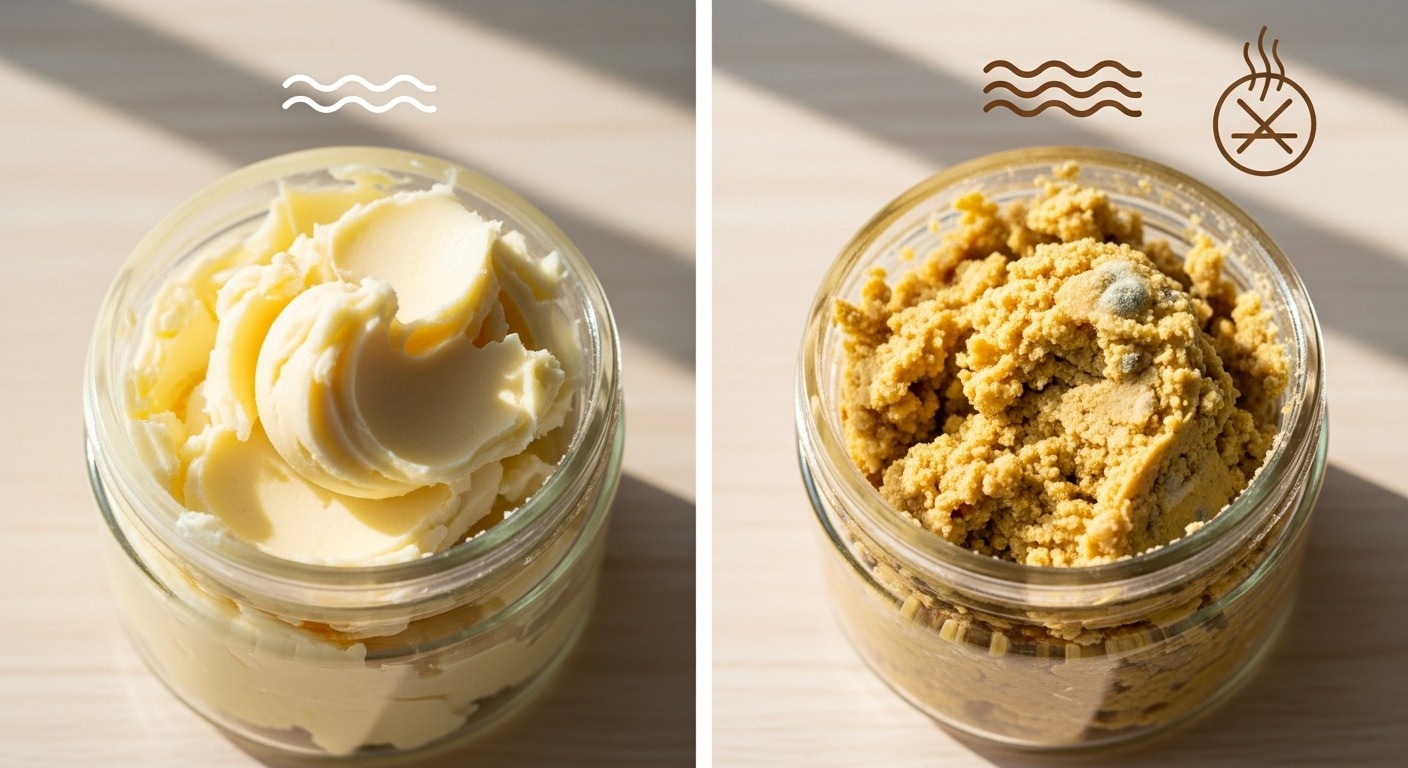
How to know if shea butter is bad by color change?
Snippet answer: Shea butter is likely expired if it turns deep yellow, gray, or uneven in color.
Color changes signal chemical breakdown.
Fresh shea butter ranges from ivory to pale yellow. Unrefined versions are slightly darker. Refined shea butter is off-white.
When shea butter degrades, exposure to heat and oxygen alters the fat structure. This leads to discoloration.
Watch for:
- Dark yellow or amber tone
- Gray or dull appearance
- Uneven patches or streaks
Color change alone does not always mean spoilage. But when combined with odor or texture changes, it strongly indicates expiration.
Does texture reveal how to tell if shea butter is expired?
Snippet answer: Yes. Expired shea butter often feels gritty, excessively hard, or greasy instead of smooth and creamy.
Texture tells a detailed story.
Fresh shea butter melts easily between fingers. It feels smooth, rich, and consistent.
When shea butter ages poorly, fat crystals separate. This leads to graininess or uneven hardness.
Common texture issues include:
- Grainy or sandy feel
- Clumps that do not melt smoothly
- Excess oil separation
- Sticky or waxy residue
Graininess alone does not always mean the butter is bad. Heat fluctuations can cause crystallization without spoilage. However, grainy texture combined with odor change usually confirms expiration.
Can expired shea butter irritate your skin?
Snippet answer: Yes. Expired shea butter may clog pores, cause breakouts, or trigger irritation due to oxidized fats.
Oxidized oils behave differently on skin.
Fresh shea butter contains stable fatty acids and antioxidants. These support the skin barrier.
Once expired, those antioxidants degrade. Free radicals increase. The butter becomes comedogenic for some users.
Possible reactions include:
- Redness or itching
- Small bumps or acne
- Burning sensation
- Dry patches despite application
If your skin reacts differently than usual, stop using the product. This is a practical way to confirm how to know if shea butter is bad when other signs are unclear.
How long does shea butter last before it expires?
Snippet answer: Shea butter lasts 12–24 months on average, depending on refinement, storage, and exposure.
| Type | Average Shelf Life |
|---|---|
| Unrefined shea butter | 12–18 months |
| Refined shea butter | 18–24 months |
Unrefined shea butter spoils faster due to natural plant residues. Refined shea butter lasts longer because impurities are removed.
Storage conditions matter more than time.
Why does shea butter expire faster in some cases?
Snippet answer: Heat, air, light, moisture, and contamination accelerate shea butter expiration.
Main causes include:
- Open containers
- Direct sunlight
- High humidity
- Using wet or dirty fingers
Each exposure introduces oxygen or microbes. This speeds oxidation.
Is mold a sign when learning how to tell if shea butter is expired?
Snippet answer: Yes. Any visible mold means shea butter is unsafe and must be discarded.
Mold appears as:
- White fuzz
- Green or black spots
- Powdery surface growth
Shea butter is low in water, so mold is rare. If you see it, contamination occurred. Do not scrape it off. Throw the product away.
Can expired shea butter still be used for non-skin purposes?
Snippet answer: Mildly expired shea butter may be used for leather conditioning or wood polish, but not skincare.
If the butter smells slightly off but has no mold, some people repurpose it.
Safe non-skin uses include:
- Leather softening
- Rust prevention on tools
- Drawer or hinge lubrication
Never use rancid shea butter on skin or hair.
How to store shea butter to prevent expiration?
Snippet answer: Store shea butter in an airtight container, away from heat, light, and moisture.
Best practices:
- Use glass or opaque containers
- Keep below 25°C (77°F)
- Use a clean spatula
- Close lid tightly after use
Refrigeration is optional but effective in hot climates.
Does refined vs unrefined affect how to know if shea butter is bad?
Snippet answer: Yes. Unrefined shea butter shows spoilage faster through smell and color changes.
Refined shea butter has a neutral scent. Any odor change is obvious. Unrefined butter already smells nutty, so subtle rancidity can be harder to detect.
Always rely on multiple signs.
So, how do you confidently tell if shea butter is expired?
Expired shea butter does not hide well. It changes how it smells, feels, looks, and performs.
If it smells sour, feels gritty, looks darker, or irritates your skin, it has passed its useful life.
Learning how to tell if shea butter is expired protects your skin and your results. Fresh shea butter supports hydration and barrier repair. Expired butter does the opposite.
Do not rely only on dates. Trust your senses. Combine smell, texture, color, and skin response.
CTA: Check your shea butter today. If you are unsure, replace it with a fresh, well-stored batch. Your skin will show the difference.
Frequently Asked Questions
How to tell if shea butter is expired without smelling it?
Check texture and color. Grainy feel, oil separation, or dark yellow color often signal expiration even before odor changes.
Can expired shea butter grow bacteria?
Yes. While rare, moisture contamination allows bacterial or mold growth. Any visible growth means discard immediately.
How to know if shea butter is bad after melting?
If melted shea butter smells sour or separates unevenly after cooling, it is likely expired.
Is it safe to use expired shea butter on hair?
No. Oxidized oils can irritate the scalp and leave hair greasy without benefits.
Does freezing extend shea butter shelf life?
Yes. Freezing slows oxidation and can extend shelf life by several months when properly sealed.
Why does my shea butter smell smoky but not bad?
Unrefined shea butter naturally smells smoky. This is normal unless the scent becomes sharp or sour.
Related Topics: How to Store Cocoa Butter Properly for Longer Shelf Life
Related Topics: Traditional Fish Sandwich Beachside Stall: Savor the Seaside Flavor