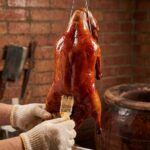
Peking Duck and Cantonese Roast Duck differ mainly in preparation, roasting, texture, seasoning, and serving style. Peking Duck prioritizes crisp, lacquered skin, while Cantonese Roast Duck emphasizes juicy meat and savory roasted flavor. Traditional Peking Duck preparation can involve several stages before roasting. Cantonese roasting generally focuses more directly on seasoning, marination, and controlled roasting.
The Core Difference: Skin, Meat, And Purpose
The easiest distinction starts with what each cooking tradition wants you to notice first. Peking Duck treats the skin almost like the centerpiece, making crispness a primary goal.
Cantonese Roast Duck takes a broader approach, balancing crisp skin with deeply seasoned, succulent meat. Therefore, the two dishes can look similar while delivering noticeably different eating experiences.
Peking Duck usually uses techniques that separate the skin from underlying fat and meat. Cooks then dry the surface carefully before roasting, helping create its signature brittle texture.
Cantonese cooks often season the duck more extensively before hanging or roasting it. As a result, the meat develops stronger savory, aromatic, and sometimes sweet notes throughout.
The contrast resembles differences between other culinary traditions where technique determines the final character. Even homemade bread collapses when preparation ignores structural details.
What Peking Duck Prioritizes
- Extremely crisp, thin skin
- Rendered duck fat beneath the skin
- Relatively mild duck meat
- Thin pancakes and aromatic accompaniments
- Delicate sauce that complements rather than dominates
What Cantonese Roast Duck Prioritizes
- Juicy, flavorful meat
- Seasoning that penetrates the cavity
- Crisp, browned skin with roasted richness
- Rice, noodles, or vegetable accompaniments
- Savory sauce made from roasting juices and seasonings
How Peking Duck Gets Its Signature Texture
Peking Duck requires careful preparation because its defining feature is exceptionally crisp skin. Cooks commonly air-dry the duck after blanching or applying a coating.
Some traditional methods use a syrup-based glaze that encourages browning and a glossy finish. The duck then hangs or rests until its exterior becomes sufficiently dry.
Roasting follows, often inside a specialized oven that provides intense, controlled heat. Consequently, the skin can become crisp while the meat remains comparatively tender.
The carving technique also matters because diners often receive carefully separated pieces of skin. Chefs may carve portions with meat attached, depending on the restaurant’s style.
Then comes the familiar assembly: pancake, sauce, duck, and aromatic vegetables. The combination creates contrasting textures instead of presenting the duck as a conventional plated roast.
Why Drying Matters So Much
Moisture works against crisp skin because surface water must evaporate before strong browning develops. Therefore, thorough drying represents one of the most important preparation stages.
Home cooks should avoid rushing this stage when attempting a Peking-style duck. Pat the exterior dry, then allow sufficient uncovered refrigeration time when appropriate.
However, food safety still matters when handling raw poultry during extended drying periods. Always follow safe refrigeration practices and avoid leaving poultry at room temperature.
How Cantonese Roast Duck Builds Flavor
Cantonese Roast Duck approaches flavor differently, often seasoning the bird internally and externally. Aromatics and savory seasonings can create a much more pronounced meat flavor.
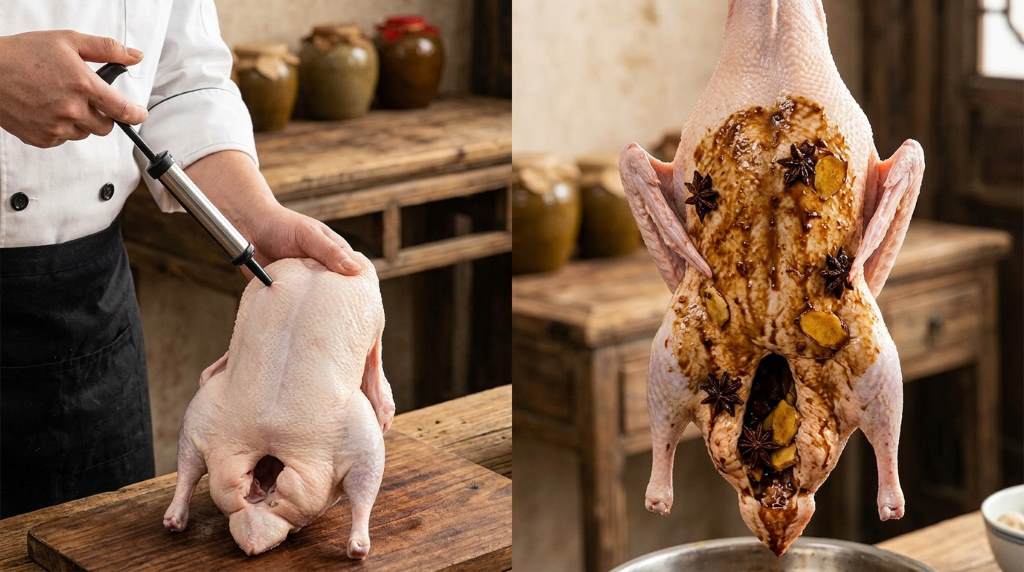
Restaurants may use ingredients such as fermented bean curd, five-spice, soy-based seasonings, sugar, or aromatic herbs. Exact formulas vary significantly between chefs, regions, and restaurants.
After seasoning, cooks typically prepare the skin for roasting and hang the duck. This hanging process encourages even roasting while allowing excess moisture and fat to escape.
Unlike Peking Duck, Cantonese Roast Duck commonly reaches the table as a complete roasted portion. Diners may receive chopped pieces containing both meat and skin.
The result works naturally with rice or noodles, especially when savory roasting sauce joins the plate. That format also explains why Cantonese roast duck frequently appears in everyday restaurant meals.
Why The Meat Tastes Different
Seasoning plays a major role because Cantonese methods often introduce flavor before roasting. Peking Duck generally keeps the meat’s seasoning more restrained.
Consequently, Cantonese Roast Duck can taste more intensely savory from the first bite. Peking Duck instead creates a layered experience through skin, sauce, pancake, and aromatics.
Seasoning And Sauce Create Another Divide
Peking Duck traditionally uses a relatively simple sauce that supports the roasted duck. Sweet bean sauce commonly provides sweetness, saltiness, fermentation, and depth.
Thinly sliced scallions and cucumber add freshness and crunch to each pancake. Together, these ingredients prevent the rich duck skin from overwhelming the palate.
Cantonese Roast Duck often comes with a more savory sauce designed for rice or noodles. That sauce can contain concentrated roasting juices and seasoned cooking liquids.
Thus, the sauce serves different purposes in each dish. Peking Duck sauce helps build a composed bite, while Cantonese sauce often completes the meal.
This distinction becomes clearer when considering other regional cooking traditions. For example, Chicago families cutting certain foods often reflect changing preferences around convenience and eating habits.
Typical Peking Duck Accompaniments
- Thin wheat pancakes
- Sweet bean sauce
- Scallions
- Cucumber
- Occasionally other fresh vegetables or condiments
Typical Cantonese Roast Duck Pairings
- Steamed white rice
- Egg noodles or wheat noodles
- Leafy greens
- Roast meat sauce
- Other Cantonese side dishes
Roasting Methods Change The Final Experience
Oven design and roasting technique strongly influence the appearance and texture of both ducks. Peking Duck traditionally relies on specialized roasting conditions and careful heat management.
Cantonese roast meat shops often use hanging ovens designed for multiple roast meats. These ovens support efficient cooking while producing characteristic browned and glossy exteriors.
Air circulation also matters because consistent heat helps render fat and develop color. Nevertheless, different restaurants can produce noticeably different results from similar methods.
Therefore, the cooking method alone cannot define quality. Skilled temperature control, preparation time, duck selection, and carving technique all influence the finished dish.
Why Restaurant Quality Varies
Two restaurants can advertise the same dish yet deliver very different textures. Freshness, duck size, drying time, oven temperature, and holding time all matter.
For Peking Duck, serving temperature becomes especially important because crisp skin loses quality quickly. Cantonese Roast Duck can tolerate slightly different service formats because the meat remains central.
When ordering either dish, look for restaurants that demonstrate strong roast-meat specialization. Busy kitchens often indicate faster turnover, which can improve freshness and texture.
Peking Duck Vs. Cantonese Roast Duck At A Glance
| Feature | Peking Duck | Cantonese Roast Duck |
|---|---|---|
| Main focus | Exceptionally crisp skin | Flavorful meat and roasted skin |
| Seasoning | Generally restrained | Usually more pronounced |
| Preparation | Detailed skin-drying process | Seasoning and hanging are central |
| Serving style | Pancakes with sauce and aromatics | Chopped pieces with rice or noodles |
| Texture | Very crisp skin with tender meat | Crisp skin with juicy, seasoned meat |
| Sauce role | Complements assembled bites | Often enriches rice or noodles |
| Eating experience | Delicate and interactive | Hearty and savory |
Which Duck Should You Order?
Your choice depends on whether you value crisp skin or deeply seasoned meat. Choose Peking Duck when you want a structured meal built around texture and presentation.
Choose Cantonese Roast Duck when you want stronger seasoning and a satisfying rice-based meal. It also makes sense when you prefer substantial meat portions over delicate assembled bites.
For a first tasting, Peking Duck offers a particularly distinctive introduction to Chinese roast duck traditions. However, Cantonese Roast Duck may feel more immediately familiar to diners who enjoy savory roasted meats.
Neither dish represents a better version of the other. Instead, each reflects different culinary priorities, serving traditions, and ideas about balance.
A Simple Ordering Strategy
Ask how the restaurant prepares its duck before ordering if the menu description seems vague. A good server should explain whether the duck follows Peking or Cantonese roast-meat traditions.
Also ask how the restaurant serves the skin and meat. That answer often reveals more about the intended experience than the dish name alone.
The Role Of Regional Chinese Cooking Traditions
Both dishes belong to broader Chinese culinary traditions with sophisticated approaches to roasting. Their differences developed through regional ingredients, cooking equipment, restaurant culture, and dining customs.
Peking Duck connects strongly with Beijing’s culinary identity and formal dining culture. Its elaborate preparation suits meals where presentation and table-side carving hold particular importance.
Cantonese Roast Duck belongs to the wider Cantonese roast-meat tradition. That tradition includes other celebrated preparations and emphasizes efficient roasting, balanced seasoning, and practical serving.
Regional cooking styles can therefore shape dishes far beyond ingredient lists. Japanese cuisine offers another useful example, where Japanese cooking styles also demonstrate how technique defines culinary identity.
Why Names Can Cause Confusion
Menus sometimes use broad terms such as roast duck without explaining the preparation. Consequently, diners may expect Peking Duck and receive Cantonese-style roasted duck instead.
Restaurants can also adapt traditional recipes for local preferences, available equipment, and service demands. Such adaptations do not automatically make the dish inauthentic.
Instead, focus on preparation details when comparing dishes across restaurants. Ask about roasting, seasoning, serving style, and the role of crispy skin.
How To Recognize A Well-Made Duck
A quality Peking Duck should deliver crisp skin without excessive chewiness or sogginess. The meat should remain moist enough to complement the rich exterior.
A quality Cantonese Roast Duck should offer juicy meat, well-rendered fat, and properly browned skin. The seasoning should provide depth without becoming aggressively salty.
Look for clean carving and consistent portions when the restaurant serves the duck chopped. Excessive grease, dry meat, or soft skin can indicate poor holding or roasting.
Furthermore, freshness matters because crispy skin deteriorates rapidly after carving. Order during busy service periods when possible, especially at specialist roast-meat restaurants.
Can You Make Either Duck At Home?
Yes, but Peking Duck usually demands more preparation and equipment than home cooks expect. Achieving truly crisp skin requires careful drying, controlled roasting, and precise temperature management.
Cantonese-style roast duck can feel more approachable because its flavor depends heavily on seasoning. However, achieving restaurant-quality skin still requires excellent heat control and proper preparation.
For either method, begin with a suitable duck and allow enough preparation time. Do not treat the process like ordinary oven-roasted poultry.
Home Cooking Priorities
- Choose a fresh, properly sized duck.
- Keep the preparation surface clean and organized.
- Dry the skin thoroughly before roasting.
- Use a reliable oven thermometer.
- Monitor internal temperature carefully.
- Rest the cooked duck appropriately before carving.
- Serve crisp-skinned duck immediately whenever possible.
Final Verdict: The Difference Comes Down To Culinary Priorities
Peking Duck centers on extraordinary crisp skin, restrained meat flavor, and an interactive pancake presentation. Cantonese Roast Duck emphasizes seasoned meat, roasted richness, and practical rice or noodle service.
In short, Peking Duck is about precision, contrast, and texture, while Cantonese Roast Duck emphasizes depth, juiciness, and savory comfort. Understanding that distinction makes choosing between them much easier.
Next time you visit a Chinese restaurant, ask how the duck receives its seasoning and how the kitchen roasts it. Then choose the style that matches your preferred texture and flavor.
If you enjoy exploring regional roast dishes, try both styles and compare them side by side. Your palate will quickly reveal why these two iconic ducks deserve separate places on the menu.
Frequently Asked Questions
Is Peking Duck crispier than Cantonese Roast Duck?
Yes, Peking Duck usually has thinner and noticeably crispier skin because drying receives greater emphasis.
Which duck has stronger seasoning?
Cantonese Roast Duck usually has stronger seasoning because cooks often flavor the meat before roasting.
Do both dishes use pancakes?
No, Peking Duck commonly uses thin pancakes, while Cantonese Roast Duck typically comes with rice or noodles.
Which duck is juicier?
Cantonese Roast Duck often tastes juicier because its preparation prioritizes seasoned, succulent meat.
Is Peking Duck healthier than Cantonese Roast Duck?
Neither automatically qualifies as healthier because portion size, skin consumption, sauces, and preparation determine the overall meal.
Conclusion
Peking Duck and Cantonese Roast Duck share a roasted foundation but pursue distinctly different culinary results. Understanding their preparation, texture, seasoning, and serving styles helps you order with confidence.
Try both styles whenever possible, then compare the skin, meat, sauce, and accompaniments. Share your favorite style with fellow food lovers and explore which regional preparation suits your palate.