Tonjiru is a beloved Japanese pork and vegetable miso soup. This hearty dish warms the soul during cold weather. However, the key to exceptional tonjiru lies in proper konjac preparation. Mastering this technique transforms your soup from ordinary to extraordinary.
Understanding Konjac in Tonjiru
Konjac is a unique ingredient in Japanese cuisine. This root vegetable becomes a jelly-like substance when processed. The texture can be challenging for newcomers. Therefore, proper preparation makes all the difference.
Traditional tonjiru always includes konjac pieces. They add a distinctive chewiness to the soup. Additionally, konjac absorbs the rich miso broth beautifully. When prepared correctly, it enhances every spoonful.
Konjac arrives in several forms at Asian grocery stores. You might find blocks, noodles, or pre-cut strips. Each type requires slightly different handling. Moreover, understanding these differences ensures better results.
Why Konjac Preparation Matters
Raw konjac has an unpleasant smell and taste. The processing liquid creates a fishy, alkaline odor. Furthermore, untreated konjac feels rubbery and unappealing. These qualities can ruin an otherwise perfect tonjiru.
Proper preparation removes unwanted flavors completely. The texture becomes pleasantly chewy instead of tough. Additionally, treated konjac absorbs soup flavors more effectively. This preparation step cannot be skipped.
Many home cooks struggle with konjac initially. They either over-prepare or under-prepare the ingredient. However, following specific techniques yields consistent results. Therefore, learning these methods proves invaluable.
Initial Rinsing Technique
Start by removing konjac from its packaging. Drain all the liquid immediately. The packaging liquid contains most of the unpleasant smell. Additionally, this liquid prevents proper seasoning later.
Rinse the konjac under cold running water. Use your hands to rub the surface gently. This physical action removes surface residue. Moreover, it begins the odor elimination process.
Repeat the rinsing process three times minimum. Each rinse removes more unwanted compounds. However, avoid over-handling at this stage. The konjac can become slippery and difficult to manage.
The Dry Roasting Method
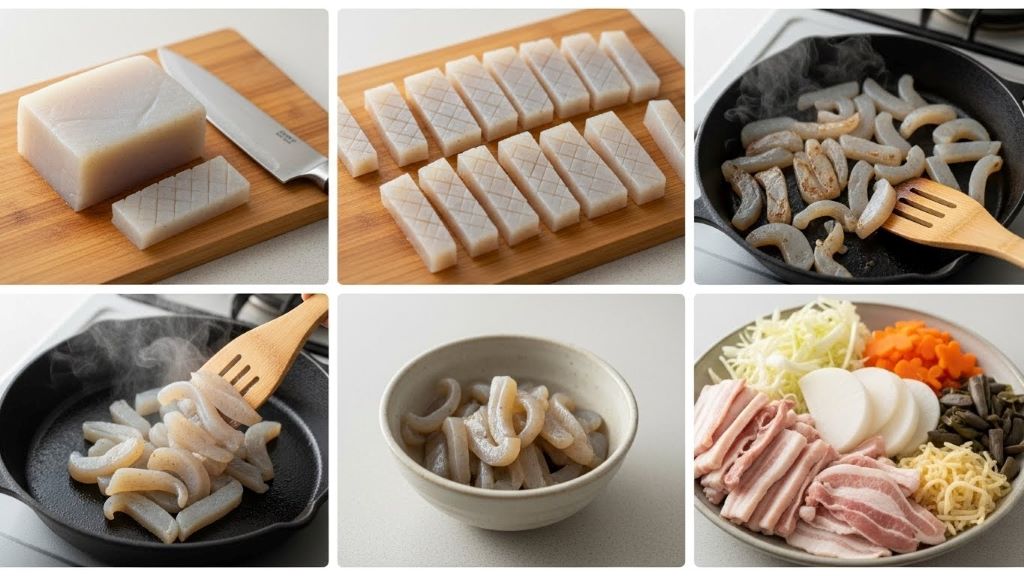
Dry roasting transforms konjac texture dramatically. This technique removes excess moisture effectively. Cut your rinsed konjac into bite-sized pieces first. Smaller pieces allow better moisture evaporation.
Heat a dry skillet over medium-high heat. Add the konjac pieces without any oil. The moisture will begin evaporating immediately. Additionally, you will hear a squeaking sound.
Stir the konjac constantly for three to five minutes. The pieces will shrink slightly as moisture escapes. Furthermore, the surface becomes slightly firm. This firmness helps konjac hold its shape in soup.
According to culinary experts at Serious Eats, dry roasting is essential for optimal konjac texture. This method creates tiny surface pores that absorb flavors better. The result is more flavorful, better-textured konjac in your finished dish.
Boiling for Odor Removal
Boiling provides the most thorough odor removal. Fill a pot with fresh water. Bring the water to a rolling boil first. Then add your rinsed konjac pieces carefully.
Boil the konjac for two to three minutes. This brief cooking removes remaining alkaline compounds. Additionally, it further softens the texture slightly. However, avoid boiling longer than five minutes.
Drain the boiled konjac in a colander. Rinse again under cold water immediately. This stops the cooking process. Moreover, it firms up the texture again slightly.
Some recipes suggest adding salt to the boiling water. The salt helps draw out additional impurities. Therefore, consider adding one tablespoon per quart of water.
Freezing Method for Texture Enhancement
Freezing creates a completely different konjac texture. This advanced technique suits adventurous cooks. The freezing process changes the internal structure permanently. Additionally, it creates a meatier, more substantial bite.
Place prepared konjac in a freezer-safe container. Freeze for at least 24 hours completely. The water inside forms ice crystals. These crystals create tiny pockets throughout the konjac.
Thaw the frozen konjac at room temperature. Squeeze out all the released water thoroughly. The konjac will feel denser and firmer. Furthermore, this texture holds up better in long-simmered soups.
However, frozen konjac has a chewier texture. Some people prefer this, while others do not. Therefore, experiment to find your preference. This method works especially well for tonjiru.
Tearing Versus Cutting Konjac
The cutting method affects texture and flavor absorption. Traditional Japanese cooks often tear konjac by hand. This creates rough, irregular surfaces. Additionally, these surfaces catch more broth.
Hold the konjac block firmly in one hand. Use your other hand to tear off bite-sized pieces. The jagged edges look rustic and authentic. Moreover, they provide more surface area for seasoning.
Alternatively, cut konjac with a knife for uniform pieces. This method offers better portion control. However, smooth cut surfaces absorb less flavor. Therefore, many chefs prefer the tearing method.
You can also use a spoon to create interesting shapes. Scrape the spoon edge against the konjac block. This creates small, irregular chunks. Furthermore, this technique combines benefits of both methods.
Seasoning the Konjac Before Adding to Soup
Pre-seasoning konjac enhances the final dish significantly. After your chosen preparation method, season the pieces. This extra step takes only minutes. However, it dramatically improves flavor penetration.
Toss prepared konjac with a small amount of soy sauce. Use approximately one tablespoon for 200 grams. The soy sauce begins flavoring immediately. Additionally, it adds an appetizing color.
Let the seasoned konjac sit for ten minutes. This resting period allows absorption. Furthermore, it gives you time to prepare other ingredients. The konjac will darken slightly during this time.
Some cooks prefer using sake instead of soy sauce. Sake provides subtle flavor without darkening the konjac. Therefore, choose based on your aesthetic preferences. Both methods work excellently.
Timing Konjac Addition to Your Tonjiru
Adding konjac at the right moment ensures perfect texture. Unlike vegetables, konjac benefits from longer cooking. Add it early in the cooking process. This allows maximum flavor absorption.
According to Japanese Taste, konjac should simmer for at least 15 minutes in the broth. This extended cooking time lets it fully absorb the miso and dashi flavors. The result is konjac that tastes integral to the dish rather than like an afterthought.
Add konjac after the pork and root vegetables. These ingredients need initial browning and cooking. However, add konjac before quick-cooking items like green onions. This ensures proper cooking times for everything.
The konjac will not overcook in tonjiru. Its unique structure prevents mushiness. Therefore, longer simmering only improves the result. Feel confident adding it early.
Combining Preparation Methods
Expert cooks often combine multiple preparation techniques. This layered approach yields superior results. Start with thorough rinsing as your foundation. Then choose additional methods based on desired texture.
For maximum flavor absorption, use this combination approach. Rinse, then dry roast, then boil briefly. This triple treatment removes all unwanted qualities. Additionally, it creates the perfect texture for tonjiru.
However, this complete process takes extra time. Consider your schedule when planning. For weeknight cooking, rinsing and boiling suffices. Save elaborate preparation for special occasions.
Experiment with different combinations to find your favorite. Keep notes on which methods you prefer. Therefore, you can replicate success consistently. Personal preference guides the best approach.
Common Konjac Preparation Mistakes
Many cooks skip the rinsing step entirely. This leaves unpleasant odors in the finished dish. Always rinse thoroughly regardless of other methods. Additionally, never use konjac straight from the package.
Over-boiling creates an undesirable texture. Konjac becomes too soft and loses its character. Keep boiling time under five minutes maximum. Furthermore, watch carefully to prevent this problem.
Using high heat during dry roasting can burn konjac. Medium heat provides the best results. The moisture evaporates without scorching. Therefore, patience during this step pays off.
Adding konjac at the last minute prevents flavor development. This common mistake yields bland, rubbery pieces. Always allow adequate simmering time. Moreover, this ensures konjac integrates with other ingredients.
Selecting Quality Konjac
Quality starts at the store. Look for konjac with clear packaging liquid. Cloudy liquid suggests old or poorly stored product. Additionally, check the expiration date carefully.
Fresh konjac feels firm through the package. Avoid soft or mushy-feeling blocks. These indicate deterioration. Furthermore, they will not have good texture regardless of preparation.
Different brands offer varying quality levels. Japanese brands often provide superior products. However, Korean and Chinese varieties work well too. Therefore, try several brands to find your preference.
Pre-cut konjac strips save preparation time. However, they sometimes have less optimal texture. Blocks allow more control over size and shape. Moreover, they often taste fresher overall.
Storing Prepared Konjac
Prepared konjac keeps well in the refrigerator. Store it in fresh water in a sealed container. Change the water daily for best results. Additionally, use within three to four days.
Freezing prepared konjac preserves it longer. However, this changes the texture permanently. The thawed product becomes denser and chewier. Therefore, only freeze if you prefer this texture.
Never leave prepared konjac at room temperature. It spoils quickly without refrigeration. Additionally, harmful bacteria can develop rapidly. Always refrigerate promptly after preparation.
Leftover tonjiru with konjac reheats beautifully. The konjac continues absorbing flavors overnight. Therefore, many people prefer day-old tonjiru. The flavors meld together perfectly.
Conclusion
Proper konjac preparation elevates your tonjiru significantly. The techniques covered transform this unique ingredient from challenging to delightful. Thorough rinsing removes unwanted odors and flavors. Dry roasting or boiling creates better texture. Additionally, methods like freezing and tearing add versatility. Pre-seasoning enhances flavor absorption. Finally, adding konjac early during cooking ensures it integrates beautifully with your soup. These steps require minimal extra effort but deliver maximum impact. Master these techniques and your tonjiru will showcase perfectly prepared konjac every time.
Frequently Asked Questions
Why does konjac smell bad when I open the package?
Konjac’s packaging liquid contains calcium hydroxide, which creates an alkaline, fishy smell. This is completely normal and does not indicate spoilage. Thorough rinsing and proper preparation methods completely remove this odor before cooking.
Can I skip the konjac preparation steps?
Skipping preparation leaves unpleasant odors and flavors in your tonjiru. The konjac will also have a rubbery, unappealing texture. Minimal preparation like rinsing and boiling takes only minutes but dramatically improves the final dish quality.
How long should I cook konjac in tonjiru?
Konjac should simmer in tonjiru for at least 15 minutes after adding. Unlike vegetables, it will not become mushy with extended cooking. Longer simmering allows better flavor absorption, making the konjac taste more integrated with the soup.
What is the difference between tearing and cutting konjac?
Tearing creates irregular, rough surfaces that absorb more broth and flavor. Cutting produces uniform pieces with smooth edges that absorb less. Traditional Japanese preparation favors tearing, but both methods work well depending on your preferences.
Can I prepare konjac in advance for tonjiru?
Yes, you can rinse, boil, and season konjac up to three days ahead. Store it in fresh water in the refrigerator, changing the water daily. This advance preparation saves time when making tonjiru and does not compromise texture or flavor.
Related Topics:
Mastering the Art of Cooking A5 Wagyu Beef: A Culinary Journey
How is Paraguayan Mbeju Traditionally Made: A Cultural Journey