
Food waste quietly drains your wallet every week. You buy vegetables with good intentions. They spoil in the fridge. Leftovers sit untouched. Expiry dates confuse you. By the end of the month, a large portion of your grocery budget disappears into the trash without you noticing.
This guide explains exactly how to reduce food waste at home using simple, realistic habits that work for busy households.
Why Is Reducing Food Waste at Home Important?
Reducing food waste at home saves money, improves meal planning efficiency, preserves nutrition, and lowers environmental impact. Smart storage, portion control, leftover reuse, and grocery planning help households prevent spoilage, extend ingredient life, and maximize every purchase without increasing cooking time or effort.
Reducing food waste at home saves money by stretching groceries longer, improving meal planning, preventing spoilage, and using leftovers efficiently. Simple habits like storing food correctly, planning weekly meals, freezing extras, and tracking expiry dates can cut household waste by up to 30 percent without changing your lifestyle significantly.
Food waste is not random. It follows predictable patterns. People overbuy. Refrigerators are poorly organized. Leftovers are forgotten. Expiry labels are misunderstood.
When these issues combine, families lose a noticeable portion of their monthly grocery budget.
Reducing waste solves three problems at once:
- Lower grocery expenses immediately
- Reduce cooking stress during busy weeks
- Increase kitchen efficiency without extra effort
Food waste reduction also improves nutrition. When ingredients are used on time, meals contain fresher vegetables, proteins, and grains instead of last-minute processed replacements.
Households that track food usage typically save 20–30% on groceries within the first two months.
What Causes Most Food Waste in Homes?
Most household food waste comes from overbuying groceries, improper storage, cooking oversized portions, misunderstanding expiry labels, and forgetting leftovers. These issues reduce ingredient lifespan and lead to unnecessary disposal even when food remains safe and usable.
Understanding the causes helps you prevent waste before it starts.
The biggest mistake is shopping without a structured plan. People buy ingredients based on intention rather than schedule. When time becomes limited, those ingredients expire unused.
Another common cause is incorrect refrigerator organization. Perishable foods often get pushed behind newer items and disappear from view.
Here are the most common waste triggers:
- Buying vegetables without a meal plan
- Ignoring freezer storage options
- Cooking portions that are too large
- Misreading “best before” dates
- Forgetting previously opened ingredients
Storage mistakes also shorten shelf life dramatically. Herbs dry quickly outside humidity-controlled drawers. Bread molds faster in refrigerators. Tomatoes lose flavor when chilled.
Recognizing these patterns allows you to stop waste at its source instead of reacting after food spoils.
How Can Meal Planning Reduce Food Waste Quickly?
Meal planning reduces food waste by aligning grocery purchases with actual consumption needs. Planning weekly menus ensures ingredients are used on schedule, prevents duplicate purchases, improves portion accuracy, and allows leftovers to be repurposed efficiently across multiple meals.
Meal planning is the fastest method to reduce waste immediately.
Instead of deciding meals daily, plan five to seven dinners before grocery shopping. This prevents impulse buying and unused ingredients.
A simple weekly planning structure works best:
- Select 3 core meals using fresh ingredients
- Add 2 quick leftover-based meals
- Include 1 freezer-friendly backup meal
- Leave 1 flexible day for spontaneous cooking
This system ensures every ingredient has a purpose.
For example, if you buy spinach for pasta on Monday, schedule omelets or soup later in the week using the remaining portion.
Batch-compatible ingredients reduce spoilage risk:
- Carrots
- Rice
- Eggs
- Chicken
- Potatoes
These items adapt across multiple recipes, extending usability.
Households that follow weekly planning routines waste significantly fewer vegetables compared to those cooking spontaneously each day.
How Should You Store Food to Make It Last Longer?
Proper food storage extends shelf life by controlling temperature, airflow, and moisture levels. Using sealed containers, separating ethylene-producing fruits, refrigerating leftovers quickly, and freezing surplus ingredients helps prevent spoilage and keeps groceries fresh for longer periods.
Storage mistakes cause more waste than cooking errors.
Correct placement inside the refrigerator matters more than most people realize.
| Food Type | Best Storage Method | Average Shelf-Life Extension |
|---|---|---|
| Leafy Greens | Sealed container with paper towel | +4 days |
| Cooked Rice | Airtight fridge container | +3 days |
| Fresh Herbs | Glass jar with water cover | +5 days |
| Bread | Room temp airtight bag | +3 days |
| Cooked Meat | Freezer-safe container | +2–3 weeks |
Another important rule is separating ethylene-producing fruits like bananas and apples from vegetables.
These fruits release gas that speeds ripening and spoilage.
Label leftovers with dates before refrigeration. This creates a visible usage timeline.
Freezing is one of the most underused waste-prevention strategies. Many foods freeze well:
- Cooked pasta sauces
- Rice
- Chicken
- Vegetable mixes
- Bread slices
Freezing turns excess groceries into future meals instead of future waste.
How Can Smart Cooking Habits Prevent Leftover Waste?
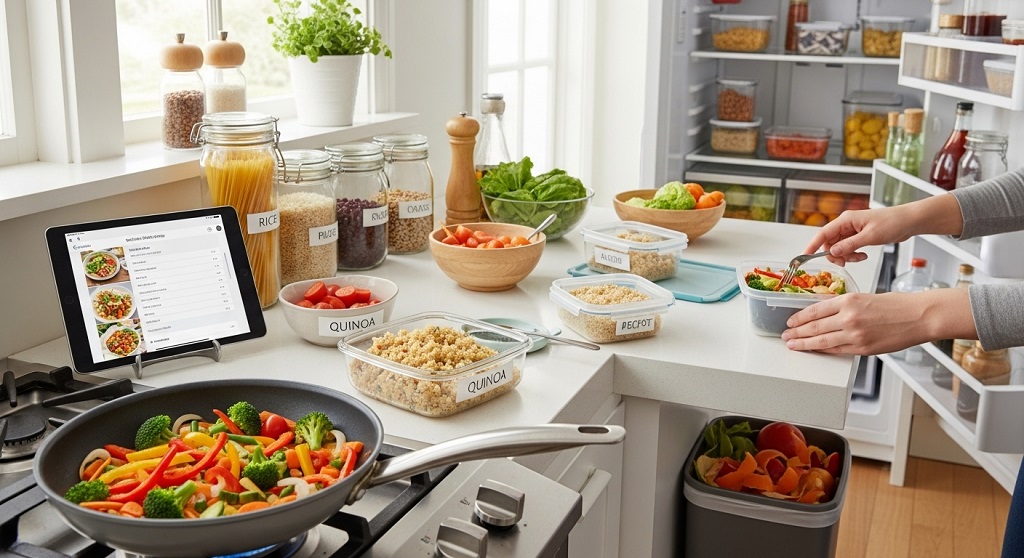
Smart cooking habits reduce leftover waste by preparing realistic portions, reusing ingredients across meals, storing cooked food immediately, and transforming surplus dishes into new recipes. Structured cooking routines help households consume prepared food before spoilage begins.
Cooking too much food is one of the most expensive habits in modern kitchens.
Instead of estimating portions visually, use measurement-based cooking for grains and proteins.
For example:
- 1 cup uncooked rice serves 2–3 people
- 120–150g chicken per adult portion is sufficient
- 1 cup vegetables per person balances meals
Transforming leftovers into new dishes increases usage dramatically.
Examples include:
- Roasted vegetables → soup base
- Rice → fried rice
- Chicken → wraps or sandwiches
- Boiled potatoes → breakfast hash
Another useful method is the “planned leftover strategy.”
Cook slightly extra food intentionally and assign it to a second meal the next day.
This eliminates random surplus and replaces it with structured reuse.
How Do Expiry Labels Affect Household Food Waste?
Expiry labels often cause unnecessary waste because many people misunderstand the difference between “best before” and “use by” dates. Learning how these labels work helps households safely consume food longer without increasing health risks.
Most packaged food remains safe after the “best before” date.
This label indicates quality, not safety.
“Use by” dates are different. They apply mainly to perishable foods like dairy, meat, and ready meals.
Understanding the distinction prevents premature disposal.
Here is a simple guideline:
- Best before = quality guideline
- Use by = safety deadline
- Frozen before expiry = extends usability
Dry goods often remain usable weeks after printed dates if stored properly.
Always inspect food using three checks:
- Smell
- Texture
- Appearance
If all indicators remain normal, disposal is usually unnecessary.
Label awareness alone can reduce packaged food waste significantly.
What Grocery Shopping Habits Reduce Waste the Most?
Smart grocery shopping reduces food waste by prioritizing planned purchases, checking existing inventory before shopping, buying smaller quantities of perishables, and choosing versatile ingredients that support multiple meals throughout the week.
Food waste often begins before groceries even enter your kitchen.
Effective shoppers treat grocery lists as structured tools, not suggestions.
Follow this simple pre-shopping checklist:
- Check refrigerator contents first
- Review freezer inventory
- Confirm upcoming meal schedule
- Avoid bulk buying perishables
Bulk discounts create hidden waste if ingredients expire unused.
Instead, buy smaller quantities more frequently for:
- Leafy vegetables
- Berries
- Fresh herbs
- Dairy products
Versatile ingredients increase efficiency.
For example, onions work in soups, curries, omelets, rice dishes, and sauces.
Multi-use ingredients reduce leftover risk across the entire week.
How Can Families Build Long-Term Waste-Free Kitchen Habits?
Families build long-term waste-free kitchen habits by tracking weekly food usage, organizing refrigerators regularly, rotating older items forward, freezing surplus ingredients early, and maintaining flexible meal plans that adapt to available groceries.
Consistency matters more than perfection.
Small routines create permanent improvement.
Start with one weekly habit:
- Friday leftover dinner night
- Sunday refrigerator check
- Midweek vegetable review
These checkpoints prevent hidden spoilage.
Another effective method is the “first in, first out” rule.
Move older ingredients to the front of shelves and newer ones behind them.
This simple adjustment reduces forgotten items dramatically.
Tracking waste visually also helps. Keep a small container for discarded food scraps.
After one week, evaluate what gets thrown away most often.
This creates data-driven improvement instead of guesswork.
Conclusion: What Is the Smartest Way to Reduce Food Waste Starting Today?
Reducing food waste at home does not require complex systems or expensive tools. It starts with awareness, planning, and smarter kitchen routines.
The most effective strategy combines three habits:
- Plan meals before shopping
- Store ingredients correctly
- Reuse leftovers intentionally
These steps alone can reduce household waste by nearly one-third.
When groceries last longer, budgets stretch further. Cooking becomes easier. Kitchens stay organized.
Start small this week.
Create one meal plan. Label leftovers once. Freeze extra ingredients early.
These simple actions build long-term savings and stronger cooking habits without adding extra work to your routine.
Take control of your kitchen today and turn every grocery purchase into a smarter investment.
Frequently Asked Questions About Reducing Food Waste at Home
How much food does the average household waste each month?
Most households waste 20–30% of purchased groceries monthly due to overbuying, poor storage, and forgotten leftovers. Improving meal planning and refrigerator organization can reduce this percentage significantly within a few weeks.
Is freezing food a reliable way to prevent waste?
Yes. Freezing slows bacterial growth and preserves ingredients for weeks or months. Foods like cooked rice, vegetables, sauces, meat, and bread freeze well and remain usable when stored in airtight containers.
What foods spoil the fastest in refrigerators?
Leafy greens, fresh herbs, berries, dairy products, and cooked leftovers spoil quickly if not stored properly. Keeping them sealed, dry, and visible increases their usability period.
Can leftovers be safely eaten after two days?
Most cooked leftovers remain safe for 3–4 days when refrigerated in airtight containers. Always check smell, texture, and appearance before consuming stored food.
Does meal planning really save grocery money?
Yes. Meal planning aligns purchases with actual consumption needs. This prevents impulse buying, reduces spoilage, and increases ingredient efficiency across multiple meals.
Are “best before” dates the same as expiry dates?
No. “Best before” refers to food quality, not safety. Many packaged foods remain safe after this date if stored correctly. “Use by” dates indicate when food should not be consumed.
What is the easiest habit to start reducing food waste today?
The easiest habit is checking your refrigerator before grocery shopping. This prevents duplicate purchases and ensures existing ingredients are used before expiration.
Read More Also: How Long Can a Betta Fish Go Without Food? (Safe Time Limits Explained)
Learn More: How to Cook Fluffy Quinoa Every Time (No Mushy Grains)