
Cocoa butter is a stable fat from cocoa beans, but poor storage exposes it to heat, light, air, and moisture shortening its usable life.
Cocoa butter is widely used in chocolate making, baking, cosmetics, and skincare. It is valued for its smooth texture, clean melt point, and long natural stability. Under ideal conditions, cocoa butter can last 2 to 5 years. But that shelf life is only achievable when you know how to store cocoa butter properly.
The problem most people face is not quality at purchase—it is storage after opening. Cocoa butter is a fat. Like all fats, it oxidizes when exposed to oxygen, degrades under heat, and absorbs odors easily. When stored incorrectly, it develops off-smells, grainy texture, or fat bloom. That means wasted money, inconsistent results in recipes, and unusable cosmetic batches.
This guide solves that problem. You will learn exactly how to store cocoa butter at home or commercially, what temperature ranges matter, which containers work best, and how to extend cocoa butter shelf life without preservatives.
How Long Does Cocoa Butter Last Under Normal Conditions?
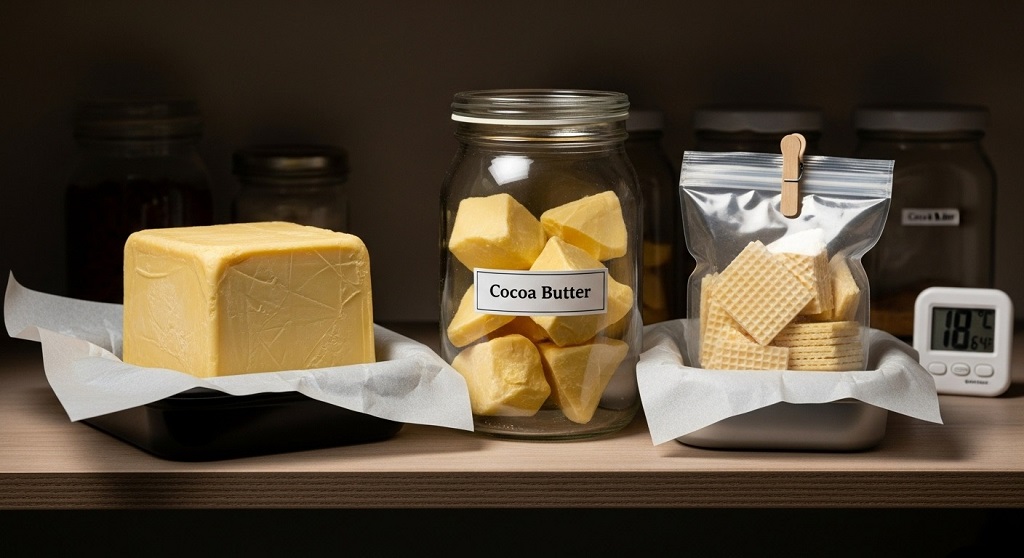
Short answer: Properly stored cocoa butter lasts 2–5 years; poor storage can reduce that to under 12 months.
Cocoa butter is one of the most stable natural fats due to its high saturated fat content (around 60%). This structure resists rancidity better than oils like sunflower or soybean oil. However, stability does not mean immunity.
| Storage Condition | Expected Shelf Life |
|---|---|
| Cool, dark, airtight storage | 3–5 years |
| Room temperature with light exposure | 18–24 months |
| Warm or humid environment | 6–12 months |
| Improperly sealed container | Less than 1 year |
If your goal is maximum cocoa butter shelf life, storage conditions matter more than brand or form.
What Is the Ideal Temperature to Store Cocoa Butter?
Short answer: Store cocoa butter between 15°C and 20°C (59°F–68°F).
Temperature is the single most important factor in cocoa butter storage. Cocoa butter melts at around 34°C (93°F). Repeated melting and re-solidifying disrupts its crystal structure, leading to fat bloom and texture changes.
At temperatures above 25°C (77°F), oxidation accelerates. Below 10°C (50°F), condensation risk increases when removed from storage.
- Avoid storage near ovens, stoves, or sunny windows
- Do not store above refrigerators where heat vents exist
- Keep away from fluctuating temperatures
Consistent temperature matters more than cold temperature.
Should Cocoa Butter Be Stored in the Refrigerator or Freezer?
Short answer: Refrigeration is optional; freezing is unnecessary and risky.
Refrigeration can extend cocoa butter shelf life if your environment is hot or humid. However, it introduces moisture risks.
When Refrigeration Makes Sense
- Room temperature consistently above 25°C
- High humidity environments
- Bulk storage for long periods
Refrigeration Best Practices
- Use airtight, moisture-proof containers
- Allow cocoa butter to return to room temperature before opening
- Label containers with date
Freezing is not recommended. Cocoa butter does not benefit from freezing and may absorb freezer odors or develop condensation issues.
What Type of Container Is Best for Storing Cocoa Butter?
Short answer: Airtight, opaque containers made of glass or food-grade plastic.
Air and light are enemies of fat stability. The wrong container shortens cocoa butter shelf life faster than temperature alone.
| Container Type | Recommended | Reason |
|---|---|---|
| Glass jars (dark) | Yes | Non-reactive, odor-proof |
| Food-grade plastic | Yes | Lightweight, airtight |
| Metal tins | Sometimes | Must be lined, risk of odor transfer |
| Paper or zip bags | No | Air and moisture exposure |
Always minimize headspace. More air equals faster oxidation.
Does Cocoa Butter Absorb Odors During Storage?
Short answer: Yes. Cocoa butter absorbs odors easily.
Because cocoa butter is fat-based, it binds volatile compounds. This is why improperly stored cocoa butter can smell like spices, soap, or cleaning products.
- Never store near spices or essential oils
- Avoid shared containers with scented products
- Use double-sealed containers if needed
Odor contamination is irreversible. Once absorbed, cocoa butter cannot be fixed.
How Can You Tell If Cocoa Butter Has Gone Bad?
Short answer: Smell, texture, and taste reveal spoilage.
Cocoa butter does not grow mold easily, but it does go rancid.
Signs of Spoiled Cocoa Butter
- Sour, waxy, or stale smell
- Sticky or greasy residue
- Sharp or unpleasant taste
- Unusual discoloration
Fat bloom (white streaks) is not spoilage. It is cosmetic and safe, but indicates temperature fluctuation.
Does the Form of Cocoa Butter Affect Storage?
Short answer: Yes. Smaller pieces degrade faster.
Cocoa butter is sold as blocks, wafers, buttons, or chips. Surface area matters.
- Blocks last longer than chips
- Wafers oxidize faster once opened
- Repackage immediately after opening
If you buy wafers in bulk, divide them into smaller airtight containers.
How Do Commercial Producers Store Cocoa Butter?
Short answer: Controlled temperature, low oxygen, no light.
Chocolate manufacturers store cocoa butter at 16–18°C with humidity under 50%. Storage rooms are dark, sealed, and monitored.
Case studies from confectionery production show that cocoa butter stored under these conditions retained acceptable sensory quality for over 48 months without additives.
You can replicate this at home with airtight containers, stable temperature, and darkness.
What Are the Most Common Cocoa Butter Storage Mistakes?
Short answer: Heat, air exposure, and poor containers.
- Leaving cocoa butter exposed after use
- Storing near heat sources
- Using permeable packaging
- Ignoring humidity
Each mistake compounds oxidation and reduces cocoa butter shelf life.
How Can You Maximize Cocoa Butter Shelf Life Naturally?
Short answer: Control air, light, heat, and moisture.
- Use airtight containers immediately after opening
- Store in dark cupboards
- Maintain stable temperature
- Label dates and rotate stock
No preservatives are needed when storage is correct.
Conclusion: What Is the Best Way to Store Cocoa Butter Long Term?
Storing cocoa butter properly is not complicated, but it requires consistency. Most spoilage happens because of small habits—leaving containers open, storing near heat, or ignoring humidity.
If you remember one rule, remember this: cocoa butter lasts longest when it is cool, dark, dry, and sealed from air. Follow that, and you will get years of reliable use for cooking, chocolate making, or skincare.
Call to Action: If you work with cocoa butter regularly, audit your storage today. Replace poor containers, move stock away from heat, and label dates. Small changes protect quality and save money.
Frequently Asked Questions About Cocoa Butter Storage
How to store cocoa butter properly at home?
Store cocoa butter in an airtight, opaque container at 15–20°C, away from light, heat, and moisture.
What is the average cocoa butter shelf life?
Properly stored cocoa butter lasts 3–5 years. Poor storage reduces this to under 12 months.
Can cocoa butter go bad?
Yes. Cocoa butter goes rancid when oxidized. It will smell sour or stale.
Is white discoloration on cocoa butter bad?
No. White streaks are fat bloom and are safe, but indicate temperature changes.
Can I store cocoa butter in plastic containers?
Yes, if the plastic is food-grade, airtight, and odor-free.
Does cocoa butter need preservatives for long storage?
No. Proper storage conditions are sufficient.
Can expired cocoa butter still be used on skin?
No. Rancid cocoa butter should not be used on skin or food.
Related Topics: How to Grow Passion Fruit Plants at Home
Related Topics: Tonjiru Recipe Konjac Preparation for Better Texture